AxiOwl vs Agent-to-Agent Protocols
Agent-to-agent protocols and AxiOwl are both responses to the same pressure: AI work is no longer happening inside one clean, isolated assistant window. People are using Codex, Cursor, VS Code chat, Copilot-backed surfaces, Antigravity, command-line agents, and remote sessions side by side. The hard part is getting those sessions to find each other, address each other, hand work across boundaries, and prove that the handoff actually reached the intended place.
That shared pressure does not make every solution the same kind of thing. Agent-to-agent protocols are mostly about standardizing how independent agent applications communicate over a shared protocol. AxiOwl is a local coordination layer for real provider sessions on a user's machine. It does not claim that every provider already implements a common agent protocol. It handles the messier practical job of discovering provider sessions, recording them in a local registry, sending through provider-specific edges, and requiring identity metadata when a provider replies.
The useful comparison is not "which one wins." The useful comparison is scope.
What agent-to-agent protocols are trying to standardize
The Agent2Agent Protocol, usually shortened to A2A, is an open protocol for communication and interoperability between agentic applications. Its documentation frames A2A as a way for agents built with different frameworks, vendors, and organizations to communicate as agents rather than being wrapped as simple tools. A2A covers agent discovery, task-oriented communication, streaming, long-running work, multi-turn collaboration, and opaque execution where agents can collaborate without exposing internal tools or memory.
In A2A, discovery centers on the Agent Card. An Agent Card is a JSON self-description that includes information such as the agent's identity, service endpoint, capabilities, authentication requirements, and skills. Public or broad-discovery agents can expose that card at a well-known URL such as /.well-known/agent-card.json; private deployments can use registries or direct configuration.
A2A also draws a clean line between MCP and agent-to-agent work. MCP is described as a protocol for connecting agents or models to tools and resources. A2A is described as the protocol for agents collaborating with other agents. In a typical architecture, an agent might use MCP internally for tools and use A2A externally to collaborate with another agent.
ACP, the Agent Communication Protocol, is another useful reference point, but with an important current-status caveat. ACP's own documentation and IBM Research page now state that ACP is part of A2A under the Linux Foundation. The ACP docs describe its original scope as a standardized RESTful API for agent interoperability, with synchronous and asynchronous communication, streaming interactions, stateful and stateless patterns, online and offline discovery, and long-running tasks.
Those protocol efforts are about shared contracts between agent applications. They are strongest when both sides of the conversation are protocol-aware participants.
What AxiOwl actually is
AxiOwl's current product source describes it differently: it is a local Windows coordinator for sending messages between AI provider sessions. It exposes a CLI and an MCP server, keeps a durable local registry of provider sessions, runs provider-specific discovery, and delivers through provider-specific edges.
The basic user-facing command is intentionally simple:
axiowl send --to "Target chat name" --body "Message text"
Provider sessions can also send through MCP using the axiowl_send_message tool. That path is preferred for provider replies because the MCP tool call can carry provider and session identity metadata. AxiOwl's MCP server description is explicit about the boundary: success from axiowl_send_message is an MCP-to-AxiOwl handoff receipt only. It does not imply that the target provider has displayed, processed, or replied to the message.
That distinction is central to AxiOwl's design. The source-of-truth docs define a support bar that includes discovery, install/config, send, provider receive, provider MCP reply, and correct sender identity. A provider is not treated as supported merely because AxiOwl can write a config file or start a process.
Scope: protocol interoperability vs local session routing
A2A starts from a protocol question: how should independent agents communicate when they can expose a shared service interface? The answer includes concepts such as Agent Cards, standardized message and task structures, HTTP, JSON-RPC, Server-Sent Events, gRPC, REST bindings, and authentication schemes.
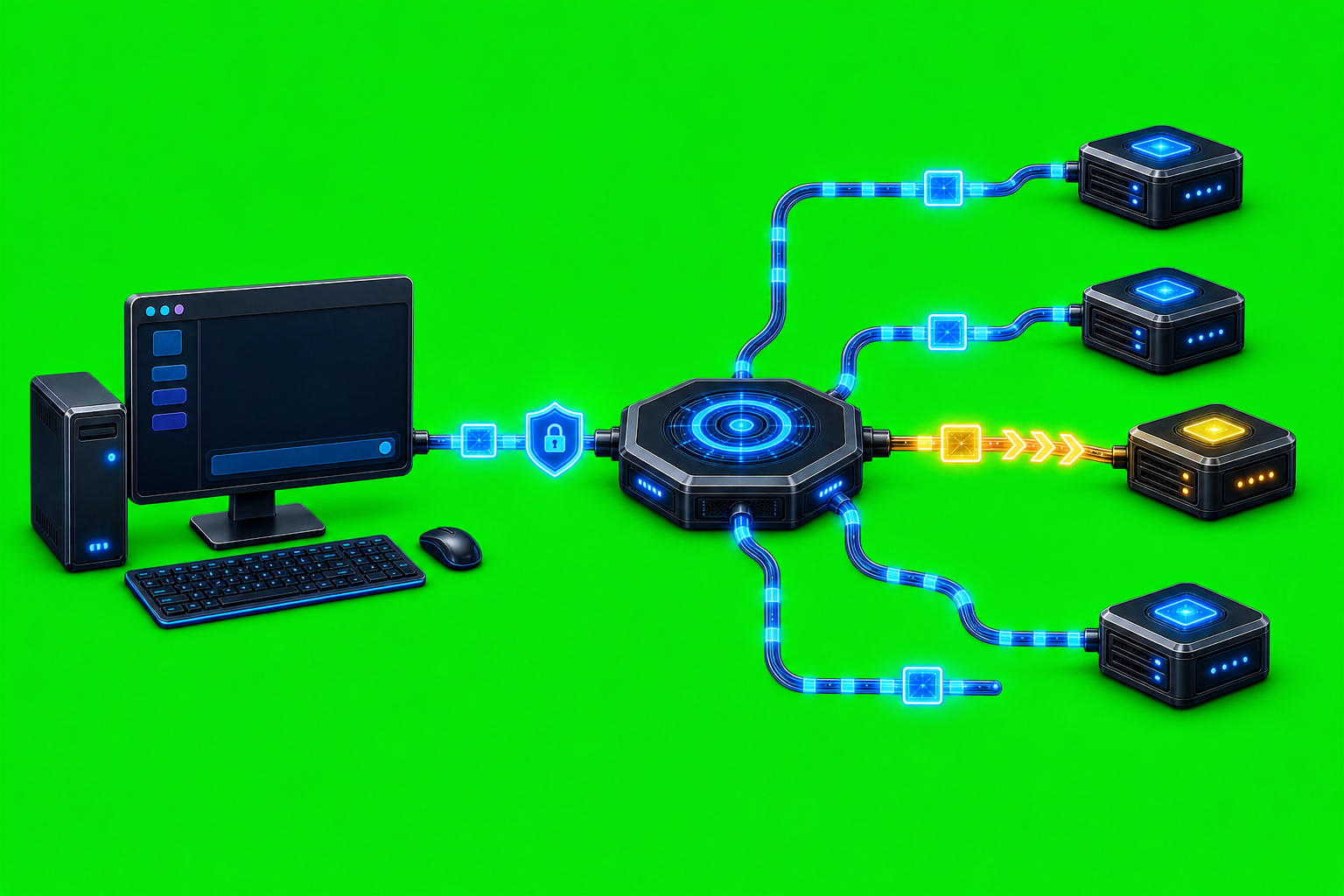
AxiOwl starts from a workstation operations question: how do I address and route messages among the provider sessions already open or discoverable on this machine?
That is why AxiOwl's registry model is concrete. A registry row represents one reachable provider session or agent. It carries fields such as display_name, aliases, provider, provider_session_id, node_id, sendable, source, last_seen_at, last_verified_at, and last_error. AxiOwl is not just storing a generic agent URL. It is preserving the provider-owned session key needed to route replies back to the correct local chat or agent surface.
This matters in everyday use. A human may know a chat by a friendly name. The provider may know it by a session UUID, thread ID, composer ID, or conversation ID. AxiOwl has to bridge those two worlds without guessing. Its registry code prefers exact provider-session matches where available, keeps aliases, handles duplicate display names by recency, and avoids treating stale rows as stronger than current provider-owned identifiers.
An agent-to-agent protocol can say, "send to this agent endpoint." AxiOwl often has to answer, "which actual provider session does that friendly name mean on this workstation right now?"
Identity: agent cards vs provider-owned session metadata
Protocol identity and local provider-session identity are different layers.
In A2A, the Agent Card is part of how an agent advertises identity, capabilities, endpoint, authentication, and skills. The protocol client can use that card to choose a remote agent and structure requests.
In AxiOwl, the harder identity question is usually the sender. A provider reply needs to route back to a real source session. For MCP replies, AxiOwl resolves identity from provider-owned metadata or provider-specific session markers. The current developer docs state that sender identity should resolve in this order:
- Provider-owned MCP metadata.
- Explicit provider session id that matches a registry row.
- Explicit sender address or alias that maps to a registry row.
- Targeted discovery repair.
The implementation reflects that rule. The MCP server recognizes provider-specific metadata keys for surfaces such as Antigravity, Cursor, Claude Code CLI, Copilot CLI, OpenCode CLI, VS Code native sessions, and Codex CLI threads. When required metadata is absent, the server refuses to launch a no-session send instead of silently inventing an identity.
That is a different problem from publishing an agent's capabilities to other systems. AxiOwl is trying to keep local messages attributable to the correct provider session so a reply does not come from a guessed display name, a stale path, or an environment variable pretending to be final identity.
Routing: common protocol operations vs provider edges
A2A defines common operations such as sending messages, sending streaming messages, getting tasks, listing tasks, canceling tasks, subscribing to task updates, and handling push notification configuration. The current specification includes JSON-RPC, gRPC, and HTTP+JSON/REST bindings.
AxiOwl's routing is deliberately provider-specific. The architecture document describes the flow as:
user / provider MCP call / CLI
  -> axiowl.exe
  -> MCP or CLI command handler
  -> MessagePipeline
  -> registry target and sender resolution
  -> targeted discovery repair when needed
  -> provider_edges dispatch
  -> provider-specific delivery
  -> delivery logs and provider proof
The provider dispatch table includes edges for surfaces such as Codex, Codex CLI, VS Code native, VS Code Copilot-backed, Antigravity, Cursor, Claude Code CLI, Copilot CLI, and OpenCode CLI. The support matrix marks some of those surfaces as supported and others as target or unsupported based on the current test bar. Remote delivery is explicitly out of scope for the local-provider remediation build, and the code returns a remote-out-of-scope result rather than using remote as a fallback for local failures.
That is the point: AxiOwl is not pretending that every provider has already adopted one shared transport. It implements edges for the provider surfaces that exist today, while keeping the support status tied to evidence.
Transport: network protocol vs local CLI, MCP, files, patches, and bridges
Agent-to-agent protocols are usually discussed as application protocols over network-friendly transports. A2A documents HTTP, JSON-RPC, Server-Sent Events, gRPC, REST-style bindings, authentication, push notifications, and task streams. ACP's documentation describes a RESTful API and streaming interactions.
AxiOwl's current transport story is more local and more varied. It has a native Windows executable, a CLI, an MCP server, provider bridge extensions/configs, provider patches where needed, a delivery worker, runtime request files, registry TSV files, and JSONL evidence logs. Its installer matrix says each provider feature should behave like a separate install unit. Selected provider integrations can install MCP config, bridge extensions, provider-owned config entries, or patches. Unchecked provider features should not be installed, patched, closed, restarted, or removed as collateral damage.
That shape is not a weakness. It is the shape of a product working with real provider surfaces whose APIs and extension points are not uniform.
For example, the provider support matrix says Cursor agents use a bridge with command files, a watcher, URI fallback, and a private patch. VS Code native and Copilot-backed support use bridge extensions and MCP definitions. CLI surfaces require provider-owned metadata before they can be considered final. Those are not protocol-spec concerns; they are local integration concerns.
Evidence: delivery proof is not the same as acceptance
This is where AxiOwl is especially strict.
The architecture docs define three different proof levels:
accepted_by_axiowl: AxiOwl accepted and validated the request and handed it to the delivery layer.accepted_by_provider: the provider edge reported that the target provider accepted the message.- response over MCP: the strongest end-to-end proof, because the target provider received the message, acted on it, and replied through AxiOwl with provider-owned sender identity.
The message pipeline records this distinction in code. A request enters the pipeline with a delivery-stage note that provider delivery is not implied. Once target and sender resolution succeed, the immediate send receipt is accepted_by_axiowl with detail set to axiowl_receipt_only. The delivery worker then handles provider dispatch and evidence logging separately.
This is an operational stance, not just an implementation detail. AxiOwl is designed to avoid false confidence. A green local receipt is not the same as a provider reply. A successful install is not the same as a working provider path. A discovered stale session is not the same as a sendable current target.
Where AxiOwl can complement protocols
AxiOwl and agent-to-agent protocols can coexist because they sit at different layers.
If a provider or local agent exposes a clean A2A endpoint, AxiOwl could eventually treat that as another provider surface. The root provider surface chart already has an a2a compatible CLI row, but it is not marked as supported in the current source. That is the right posture: protocol compatibility should not be claimed until there is a real edge, real discovery or configuration, real send semantics, and response-backed proof.
In the other direction, AxiOwl can give local agents a practical bridge while the broader protocol ecosystem matures. A Codex thread, Cursor session, VS Code chat, and Antigravity conversation may not all expose the same public agent service. AxiOwl can still register them locally, address them by name or session identity, route messages through the available provider surface, and ask the recipient to reply over MCP.
That makes AxiOwl less like a universal standard and more like an operational adapter for the machine where the work is happening.
Practical comparison
Use an agent-to-agent protocol when the problem is cross-application interoperability between agents that can expose or consume the protocol. If the agents can publish capabilities, authenticate clients, accept protocol-native tasks, stream updates, and maintain a standard conversation/task lifecycle, A2A is designed for that world.
Use AxiOwl when the problem is provider-session coordination on a local Windows workstation. It is especially relevant when the targets are existing chats, CLI sessions, editor-backed agents, or provider-specific surfaces where routing depends on local state and provider-owned session IDs.
The difference can be summarized this way:
| Dimension | Agent-to-agent protocols | AxiOwl |
|---|---|---|
| Main job | Standardize communication between independent agent applications | Route messages between local provider sessions |
| Discovery | Agent Cards, well-known URLs, registries, direct configuration | Provider-specific local discovery merged into a durable registry |
| Identity | Agent/service identity and protocol authentication | Provider-owned session metadata, aliases, registry rows, sender resolution |
| Transport | HTTP, JSON-RPC, SSE, gRPC, REST-style bindings, protocol APIs | CLI, MCP server, provider bridges, patches, delivery worker, local files/logs |
| Proof | Protocol responses, task status, streaming updates | Separated handoff, provider acceptance, and MCP reply evidence |
| Best fit | Protocol-aware agents across systems or organizations | Real provider sessions already running on a user's machine |
Closing
AxiOwl should not be described as a replacement for A2A, ACP, or any other agent-to-agent standard. It is narrower, more local, and more operational. That is also why it is useful.
Agent-to-agent protocols answer the question, "What shared protocol should agents implement so they can collaborate?" AxiOwl answers a different question: "Given the provider sessions I already use, how can I address them, route messages between them, preserve sender identity, and prove what actually happened?"
For operators and developers, that difference matters. Standards make the future cleaner. AxiOwl works in the current provider reality, where evidence, session identity, and provider-specific routing are still the difference between a message that merely left your terminal and a message that actually reached the right agent.
Sources read
AxiOwl product sources:
C:\Users\kjhgf\OneDrive\Documents\postfourth\axiowl-cplus\README.mdC:\Users\kjhgf\OneDrive\Documents\postfourth\axiowl-cplus\PROVIDER-SURFACE-SUPPORT-CHART-2026-07-06.mdC:\Users\kjhgf\OneDrive\Documents\postfourth\axiowl-cplus\docs\README.mdC:\Users\kjhgf\OneDrive\Documents\postfourth\axiowl-cplus\docs\reference\README.mdC:\Users\kjhgf\OneDrive\Documents\postfourth\axiowl-cplus\docs\reference\architecture-overview.mdC:\Users\kjhgf\OneDrive\Documents\postfourth\axiowl-cplus\docs\reference\provider-support-matrix.mdC:\Users\kjhgf\OneDrive\Documents\postfourth\axiowl-cplus\docs\reference\installer-behavior-matrix.mdC:\Users\kjhgf\OneDrive\Documents\postfourth\axiowl-cplus\docs\reference\release-validation-checklist.mdC:\Users\kjhgf\OneDrive\Documents\postfourth\axiowl-cplus\docs\user\README.mdC:\Users\kjhgf\OneDrive\Documents\postfourth\axiowl-cplus\docs\developer\README.mdC:\Users\kjhgf\OneDrive\Documents\postfourth\axiowl-cplus\docs\security\trust-boundaries.mdC:\Users\kjhgf\OneDrive\Documents\postfourth\axiowl-cplus\apps\windows-desktop\src\cli.cppC:\Users\kjhgf\OneDrive\Documents\postfourth\axiowl-cplus\apps\windows-desktop\src\message_pipeline.cppC:\Users\kjhgf\OneDrive\Documents\postfourth\axiowl-cplus\apps\windows-desktop\src\mcp_server.cppC:\Users\kjhgf\OneDrive\Documents\postfourth\axiowl-cplus\apps\windows-desktop\src\registry.cppC:\Users\kjhgf\OneDrive\Documents\postfourth\axiowl-cplus\apps\windows-desktop\src\registry.hppC:\Users\kjhgf\OneDrive\Documents\postfourth\axiowl-cplus\apps\windows-desktop\src\provider_edges.cppC:\Users\kjhgf\OneDrive\Documents\postfourth\axiowl-cplus\apps\windows-desktop\src\delivery_worker.cppC:\Users\kjhgf\OneDrive\Documents\postfourth\axiowl-cplus\apps\windows-desktop\src\evidence_log.cppC:\Users\kjhgf\OneDrive\Documents\postfourth\axiowl-cplus\apps\windows-desktop\src\app_paths.cppC:\Users\kjhgf\OneDrive\Documents\postfourth\axiowl-cplus\apps\windows-desktop\src\models.hppC:\Users\kjhgf\OneDrive\Documents\postfourth\axiowl-cplus\apps\windows-desktop\src\provider_codex.cppC:\Users\kjhgf\OneDrive\Documents\postfourth\axiowl-cplus\apps\windows-desktop\tests\core_tests.cppC:\Users\kjhgf\OneDrive\Documents\postfourth\axiowl-cplus\apps\windows-desktop\tests\mcp_conformance.ps1
External protocol sources:
- A2A Protocol documentation, "What is A2A?" –
https://a2a-protocol.org/latest/topics/what-is-a2a/ - A2A Protocol documentation, "A2A and MCP" –
https://a2a-protocol.org/latest/topics/a2a-and-mcp/ - A2A Protocol documentation, "Agent Discovery" –
https://a2a-protocol.org/latest/topics/agent-discovery/ - A2A Protocol specification –
https://a2a-protocol.org/latest/specification/ - A2A GitHub repository –
https://github.com/a2aproject/A2A - Google Developers Blog, "Announcing the Agent2Agent Protocol (A2A)" –
https://developers.googleblog.com/en/a2a-a-new-era-of-agent-interoperability/ - Agent Communication Protocol documentation –
https://agentcommunicationprotocol.dev/introduction/welcome - IBM Research, "Agent Communication Protocol" –
https://research.ibm.com/projects/agent-communication-protocol - AGNTCY documentation overview –
https://docs.agntcy.org/
Image prompt:
Create a polished graphic image related to: local provider-session routing compared with agent-to-agent protocols.
Subject: a technical comparison scene with two abstract routing systems side by side: one open network protocol gateway with modular connected service nodes, and one local workstation coordination hub with several provider session tiles feeding into a central router; use only unlabeled geometric panels, cables, ports, check indicators, and signal paths; no readable text.
Style: halfway between a clean symbolic icon and a realistic product/technical illustration; professional SaaS/technical marketing style; crisp edges; high detail; no text; no logos.
Background: solid #00ff00 chroma key green screen background covering the full canvas edge to edge.
Restrictions: no owl, no axolotl, no birds, no animals, no mascot, no text, no watermark.