AxiOwl vs Framework-Level Agent Teams
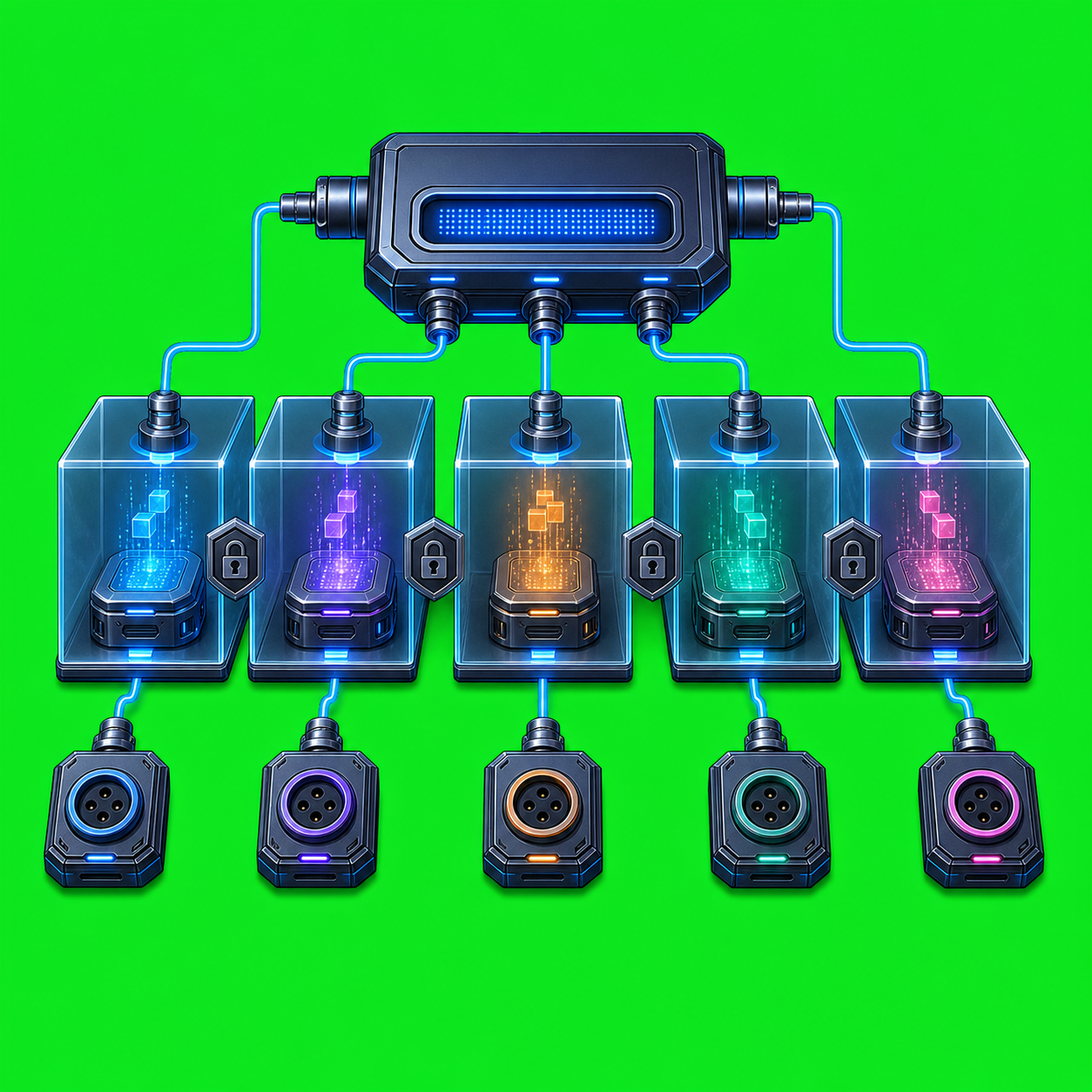
Framework-level agent teams and AxiOwl both deal with coordination between AI sessions, but they sit at different layers. A framework-level team is usually something an application developer defines inside one runtime: roles, tools, handoffs, routing rules, and shared state all live in the app or service being built. AxiOwl is a local coordinator for existing provider sessions on the operator's machine. It does not replace those providers and it does not require every participant to be rewritten into one framework.
That difference is the main reason AxiOwl exists. Real developer workflows often already have useful sessions open in Codex, Cursor, VS Code, Copilot-backed VS Code, Antigravity, or provider CLIs. The problem is not always "build one more agent graph." Sometimes the problem is "send this exact message from this exact session to that exact session, keep sender identity intact, and show what actually happened."
Different Control Planes
A framework-level agent team usually controls the agents it creates. The application decides which role runs next, which model or tool each role can use, how shared memory is represented, and what counts as a completed step. That is a good fit when the whole workflow belongs to one product surface or backend service.
AxiOwl's C++ repo shows a different control plane. The architecture overview in docs/reference/architecture-overview.md describes AxiOwl as a local Windows coordinator that exposes a CLI and MCP server, keeps a durable local registry of provider sessions, discovers active sessions, and delivers messages through provider-specific edges.
The flow is concrete:
user / provider MCP call / CLI
  -> axiowl.exe
  -> MCP or CLI command handler
  -> MessagePipeline
  -> registry target and sender resolution
  -> targeted discovery repair when needed
  -> provider_edges dispatch
  -> provider-specific delivery
  -> delivery logs and provider proof
That is not an in-framework planner deciding which role should speak next. It is routing infrastructure around provider sessions that may already exist outside AxiOwl.
The Team Is Not The Runtime
In AxiOwl, the "team" is represented by reachable provider sessions, not by a single framework object. The user docs say AxiOwl discovers provider sessions and chats on the machine, records them in a local registry, sends messages to selected provider sessions, exposes an MCP tool for replies, records receipts and delivery evidence, and installs provider-specific integration pieces.
The registry shape makes the difference visible. apps/windows-desktop/src/models.hpp defines AgentRecord with fields for display name, aliases, provider, provider session ID, node ID, enabled state, sendability, discovery source, first-seen time, last-seen time, last-verified time, and last error. apps/windows-desktop/src/registry.cpp uses those fields to look up targets and sender identities by name, alias, or session identifier.
That gives AxiOwl an address book for AI sessions. A framework team might say "call the reviewer role." AxiOwl says "resolve this registered target to a provider-owned session ID, confirm it is sendable, and use the provider edge that owns it."
Provider Edges Instead Of One Adapter
The current provider dispatch table lives in apps/windows-desktop/src/provider_edges.cpp. It routes delivery to provider modules for codex, codex_cli, vscode_native, vscode_copilot_backed, antigravity, antigravity_cli, cursor, cursor_cli, claude_code_cli, copilot_cli, and opencode_cli. If the registry row has an unknown provider, AxiOwl returns an unknown-provider failure. If the target is remote, the current local-provider remediation build returns a specific out-of-scope result instead of silently treating remote delivery as a fallback.
That matters operationally. A framework-level team often benefits from a uniform abstraction over model calls and tools. AxiOwl benefits from preserving provider differences. Cursor delivery is not the same as Codex delivery. VS Code native delivery is not the same as Copilot-backed VS Code delivery. Some surfaces are supported today, some are targets, and some are explicitly unsupported in the current support matrix.
docs/reference/provider-support-matrix.md sets that bar directly. A provider surface is supported only when discovery works, the installer installs the required pieces, AxiOwl can send to a named session, the provider receives the message, the provider replies through AxiOwl MCP, and the reply carries correct provider-owned sender identity. Writing a config file or starting a process is not enough.
Sender Identity Is A First-Class Requirement
Framework-level teams often know their participants because the application created them. AxiOwl has the harder job of identifying sessions that live in provider-owned surfaces.
The MCP server implementation in apps/windows-desktop/src/mcp_server.cpp is built around this constraint. The axiowl_send_message tool requires to and body, but the server also resolves host metadata into a sender identity. For Codex, Cursor, Antigravity, Claude Code CLI, Copilot CLI, OpenCode CLI, and related surfaces, the code looks for provider/session metadata rather than asking the user or the receiving chat to invent an ID.
When metadata is missing, AxiOwl is designed to fail loudly. The missing_identity_message path says the relevant host did not provide usable session ID metadata and refuses the action. The bundled Codex skill under apps/windows-desktop/extensions/codex-plugin/skills/axiowl/SKILL.md says the same thing in operational language: use the bundled MCP tool because it receives Codex thread metadata, do not ask the chat agent to know its own session ID, and do not invent sender names when metadata is missing.
That is a practical distinction from many in-app team designs. AxiOwl does not want a friendly display name to become the routing truth. It wants provider-owned identity where possible, then registry-backed resolution, then observable failure if neither is available.
The Send Path Is Narrow On Purpose
The CLI usage in apps/windows-desktop/src/cli.cpp exposes the core operator path:
axiowl send --to <agent> --body <message> [--from <agent>] [--from-node <node>]
axiowl send --to <agent> --stdin [--from <agent>] [--from-node <node>]
axiowl create --provider <provider> --name <agent> [--body <message> | --stdin]
axiowl discover <provider|all> [--target <agent>] [--json]
axiowl list agents
axiowl mcp-server
The MCP send path uses the same machinery. In handle_send_message, the MCP server registers the sender identity, builds CLI send arguments with --to, --from, --from-node, and --stdin, then runs the CLI path with the body supplied over standard input. That keeps provider-to-provider replies and operator sends on the same registry-backed path.
The MessagePipeline in apps/windows-desktop/src/message_pipeline.cpp enforces the narrow contract. It rejects empty targets and empty bodies. It resolves sender identity. It tries one targeted discovery repair when a target is missing or stale. It rejects known-but-not-sendable targets. Only after target resolution does it set accepted_by_axiowl, build the final visible body, and hand the provider request to the delivery worker.
That narrowness is not a limitation in this context. It is what makes AxiOwl inspectable. The operator can ask a small set of questions: who sent, who was targeted, which registry row matched, which provider edge was selected, and what receipt boundary was reached?
Replies Are Routed Back, Not Assumed
A framework-level team can often route return values through its own call stack. AxiOwl cannot assume that. A message may be delivered into a provider UI or provider session that acts outside AxiOwl's process.
apps/windows-desktop/src/final_visible_body_builder.cpp shows how AxiOwl handles this. When sender identity is resolved, AxiOwl builds a visible message that starts with the sender name, includes the original body, and appends an MCP reply instruction for mcp__axiowl.axiowl_send_message. The reply instruction can carry runId and receiptForMessageId, tying a response back to the original handoff.
This is an important product choice. AxiOwl does not pretend that a provider response is automatically available just because the local coordinator accepted a request. A response becomes stronger evidence when the target provider replies through AxiOwl MCP with usable sender identity.
Honest Receipts Matter More Than Smooth Demos
The user docs and CLI output both make receipt boundaries explicit. docs/user/README.md says accepted_by_axiowl means AxiOwl accepted the message and handed it to the delivery layer; it does not prove the target provider displayed or processed the message. apps/windows-desktop/src/cli.cpp prints the same warning for the normal accepted state: provider delivery, provider wake-up, and provider reply are not implied.
The delivery worker keeps that boundary intact. apps/windows-desktop/src/delivery_worker.cpp writes a request file, starts provider dispatch in a worker mode, records validation and provider write stages, and reports provider write success, unverified handoff, or failure as separate states.
For a developer using several provider surfaces, this is more useful than a polished but vague team transcript. The receipt tells you where the handoff stopped. The evidence log records events as JSON lines. The delivery log records stages with run ID, message ID, provider, target, session ID, node, stage, result, detail, and source.
Installer Behavior Also Reflects The Layer
AxiOwl's installer model is another sign that it is not just a framework-level team abstraction. docs/reference/installer-behavior-matrix.md says the MSI installs AxiOwl once, but each provider feature should behave like a separate install unit. Provider checkboxes should default from discovery, unchecked features should not be installed or patched as collateral damage, and selected features should fail loudly when they cannot be installed safely.
The installer matrix also lists provider-specific actions: Codex plugin/skill support, VS Code bridge extension and MCP server definition, Cursor bridge extension and patch flow, Antigravity MCP config, and target-state CLI integrations that still require stronger metadata proof. That kind of install behavior belongs at the workstation/provider-integration layer, not inside a single agent framework's team graph.
When Each Model Fits
A framework-level agent team is the right tool when the application owns the whole workflow. If you are building a service with defined roles, shared state, task decomposition, tool policies, and one deployment target, a framework team can be clean and powerful.
AxiOwl fits when the work crosses provider boundaries that already exist. It is useful when the operator wants to send a message from one live session to another, preserve provider-owned sender identity, list sendable targets, discover local provider sessions, create or rename provider chats where supported, and inspect handoff evidence without pretending that every provider behaves the same way.
The comparison is not "frameworks are bad and AxiOwl is a framework." The comparison is layer versus layer. Framework-level teams coordinate agents inside an application. AxiOwl coordinates named provider sessions around the application, using a local registry, provider-specific edges, MCP reply paths, and explicit receipt boundaries.
Bottom Line
AxiOwl is best understood as provider-session routing infrastructure. It helps existing AI sessions talk to each other while keeping sender identity, target resolution, provider-specific delivery, and proof boundaries visible.
Framework-level agent teams are still valuable when the team belongs inside one app. AxiOwl is for the other common case: a developer already has useful provider sessions running, wants them to cooperate, and needs the handoff to be addressable, inspectable, and honest.
Source basis: README.md, docs/user/README.md, docs/developer/README.md, docs/reference/architecture-overview.md, docs/reference/provider-support-matrix.md, docs/reference/installer-behavior-matrix.md, apps/windows-desktop/src/cli.cpp, apps/windows-desktop/src/message_pipeline.cpp, apps/windows-desktop/src/models.hpp, apps/windows-desktop/src/registry.cpp, apps/windows-desktop/src/provider_edges.cpp, apps/windows-desktop/src/mcp_server.cpp, apps/windows-desktop/src/final_visible_body_builder.cpp, apps/windows-desktop/src/delivery_worker.cpp, and apps/windows-desktop/extensions/codex-plugin/skills/axiowl/SKILL.md in C:\Users\kjhgf\OneDrive\Documents\postfourth\axiowl-cplus.