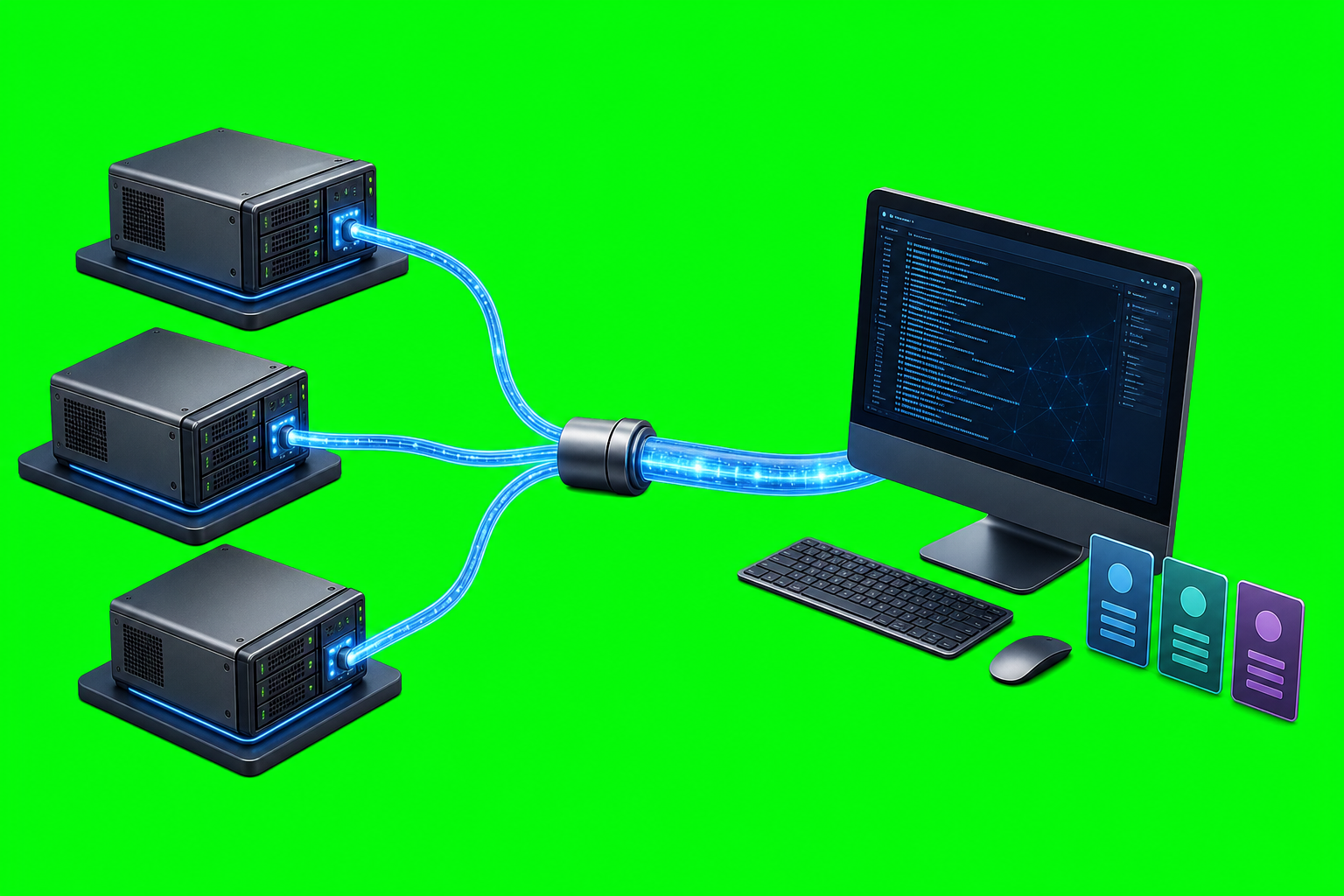
How Separate Agent Contexts Protect Strategic Reasoning
Strategic reasoning gets fragile when every role is forced through one crowded conversation. A planning thread accumulates assumptions, partial decisions, discarded options, and momentum. That can be useful for continuity, but it can also make review weaker: the same context that produced a plan is already biased toward defending it. Separate agent contexts help because each session can hold a narrower responsibility, and information crosses between sessions only when someone sends it.
In AxiOwl, that separation is an operating property of named provider sessions coordinated through explicit messages. It is not hidden shared memory. It is not automatic strategy synthesis. AxiOwl keeps a local registry of provider sessions, resolves who is sending and who should receive, builds a visible message body, dispatches through a provider-specific edge, and records what happened. The strategic value comes from that boundary.
Sources read
README.mddocs/README.mddocs/user/README.mddocs/developer/README.mddocs/reference/README.mddocs/reference/architecture-overview.mddocs/reference/provider-support-matrix.mddocs/security/trust-boundaries.mddocs/providers/README.mddocs/providers/codex-agents.mddocs/providers/vscode-native.mddocs/providers/cursor-agents.mddocs/providers/antigravity-agents.mdapps/windows-desktop/src/models.hppapps/windows-desktop/src/registry.cppapps/windows-desktop/src/message_pipeline.cppapps/windows-desktop/src/final_visible_body_builder.cppapps/windows-desktop/src/mcp_server.cppapps/windows-desktop/src/provider_edges.cppapps/windows-desktop/src/cli.cppapps/windows-desktop/tests/core_tests.cpp
Separate Context Means Separate Provider Sessions
AxiOwl's current architecture describes it as a local Windows coordinator for sending messages between AI provider sessions. Those sessions can be Codex agents, Codex CLI sessions, VS Code native sessions, Copilot-backed VS Code sessions, Cursor agent sessions, Antigravity sessions, and other provider surfaces with different support status. The key point is that AxiOwl addresses sessions; it does not collapse them into one global workspace memory.
The registry model makes that concrete. A registered agent row stores a human-facing display name, aliases, provider, provider session id, node id, enabled state, sendable state, source, timestamps, and last error. The provider session id is especially important: it is the provider-owned handle that distinguishes one reachable session from another.
The tests reinforce this boundary. When two registry rows have the same display name but different provider sessions, AxiOwl keeps both rows instead of merging them into a single ambiguous agent. Lookup by name can prefer the newest matching sendable row, but exact session lookup still addresses the exact session. That is the difference between "send this to the current review agent" and "accidentally blend two chats that happen to share a label."
For strategic work, this matters. A planning session can remain the planning session. A review session can remain a colder context. An implementation session can receive only the decision it needs. AxiOwl coordinates the exchange, but the provider sessions keep their own histories.
The Boundary Is A Message, Not A Leak
The normal CLI shape is explicit:
axiowl send --to "Target chat name" --body "Message text"
For larger or structured payloads, the CLI also accepts --stdin. Provider sessions can send through the MCP tool axiowl_send_message. In the MCP path, AxiOwl uses the host MCP session id as a stable sender identity key, resolves that key to the registered visible sender name, and tells provider hosts to use the typed tool rather than inventing raw command lines.
That is a deliberate design choice. A reply is not a private continuation inside a shared memory pool. It is a new message, addressed to a registered target. When AxiOwl builds the visible body for a resolved sender, it includes:
- the sender line, such as
Message from Sender Agent; - the original message body;
- an exact MCP reply call using
mcp__axiowl.axiowl_send_message; - optional run and receipt correlation fields when present.
The tests also check what is not allowed back into that body. Old shell fallback wording and explicit CLI sender instructions are rejected by the test expectations. The preferred reply route is the MCP tool because it carries provider/session identity metadata.
This protects strategic reasoning by making handoffs visible. If a strategy agent wants a second opinion, it has to send the plan. If the reviewer responds, that response is another explicit message. The boundary forces summarization, ownership, and attribution instead of passive context bleed.
Sender Identity Is Part Of The Protection
Separate contexts only help if AxiOwl can tell which context is speaking. The source docs and implementation are strict about this. The MCP server requires provider/session metadata for sender identity and fails loudly when usable identity is missing. The developer docs specify the sender identity order: provider-owned MCP metadata first, then explicit provider session id, then explicit sender address or alias, then targeted discovery repair.
The message pipeline follows the same rule. A send must have a target and a body. It must resolve the sender. If the sender is unresolved, the send is rejected with an error instead of silently guessing. If the target is missing or stale, AxiOwl can run one targeted discovery repair, then it still requires a sendable registry row.
That is important for strategic reasoning because the return path is part of the argument. A useful review is not just "some agent said this." It is "this registered session, with this provider/session identity, replied through AxiOwl." When the sender identity is real, AxiOwl can append a reply instruction back to the right session. When it is not real, the final body uses an unresolved sender warning instead of pretending a reliable return path exists.
Receipts Do Not Pretend To Be Reasoning
AxiOwl also separates local acceptance from provider proof. The architecture docs state that accepted_by_axiowl means AxiOwl accepted and validated the request and handed it to the delivery layer. It does not prove that the provider displayed the message, processed it, or replied.
The implementation matches that contract. MessagePipeline records the accepted_by_axiowl receipt after sender and target resolution, before provider delivery has to complete. Core tests assert that the send receipt must not report provider acceptance, must log the receipt boundary before provider work, and must not wait for a provider delivery result before returning.
This is another strategic safety feature. A system that blurs "queued" into "understood" can produce false confidence. AxiOwl does not treat a local handoff as proof that another context has done reasoning. The stronger proof is a response over MCP with correct sender identity. That keeps operators from mistaking transport progress for strategic agreement.
What This Enables In Practice
Separate contexts are most useful when the work has roles:
- a planner that owns the high-level approach;
- a critic that receives the plan and challenges hidden assumptions;
- an implementer that receives only the approved next step;
- a verifier that receives the output and checks behavior against evidence.
AxiOwl can support that pattern because it routes between named sessions instead of requiring every role to share one prompt window. A planner can send a concise plan to a reviewer. The reviewer can send objections back through AxiOwl. The implementer can receive a narrower instruction without inheriting the entire planning debate. The verifier can see the artifact and the claim it is checking.
The registry and evidence model also help operators debug the workflow. AxiOwl tracks provider, provider session id, sendability, discovery source, last-seen fields, last-verified fields, errors, receipt state, body size, and delivery handoff details. If a handoff fails, the failure should be visible: missing identity, unknown provider, non-sendable target, unsupported remote path, provider rejection, or provider unavailability.
That kind of explicitness is what protects reasoning at workflow level. It does not make any agent smarter by itself. It gives each agent a cleaner context and gives the human operator a clearer record of what crossed the boundary.
What AxiOwl Does Not Claim
AxiOwl does not claim that separate provider sessions automatically produce better strategy. The software cannot prove that a planning agent is wise or that a reviewer is right. It also does not claim that agents share a hidden strategic memory. The current product behavior is message routing, sender and target resolution, provider-specific delivery, MCP replies, registry state, and evidence logging.
That restraint is part of the design. AxiOwl protects strategic reasoning by keeping coordination explicit. Context stays inside provider sessions until a message is sent. Replies come back through a typed path with identity metadata. Receipts are bounded to what AxiOwl actually knows. Supported provider status depends on discovery, install/config, send, provider receive, MCP reply, and correct sender identity.
When agents are coordinated this way, a strategic workflow can have multiple viewpoints without dissolving into one overloaded conversation. The plan, the critique, the implementation request, and the verification result each become deliberate handoffs. That is the practical value of separate agent contexts in AxiOwl: cleaner reasoning boundaries, fewer accidental assumptions, and a route back to the session that actually spoke.
Image prompt:
Create a polished graphic image related to: separate agent contexts protecting strategic reasoning.
Subject: a central transparent routing switch with several isolated glass planning chambers connected by glowing message packets, each chamber visually distinct and separated by clear partitions, no readable labels.
Style: halfway between a clean symbolic icon and a realistic product/technical illustration; professional SaaS/technical marketing style; crisp edges; high detail; no text; no logos.
Background: solid chroma key green screen background covering the full canvas edge to edge, exact color #00ff00.
Restrictions: no owl, no axolotl, no birds, no animals, no mascot, no text, no watermark.