Using AxiOwl for Multi-Agent WordPress Operations
WordPress operations often involve more than one kind of work at the same time. One agent may inspect a plugin build, another may check content or routing, another may review deployment notes, and another may verify behavior in a browser. The hard part is not just giving agents tasks. It is keeping the handoffs explicit enough that no one edits the wrong thing, assumes the wrong host, or treats a partial result as proof.
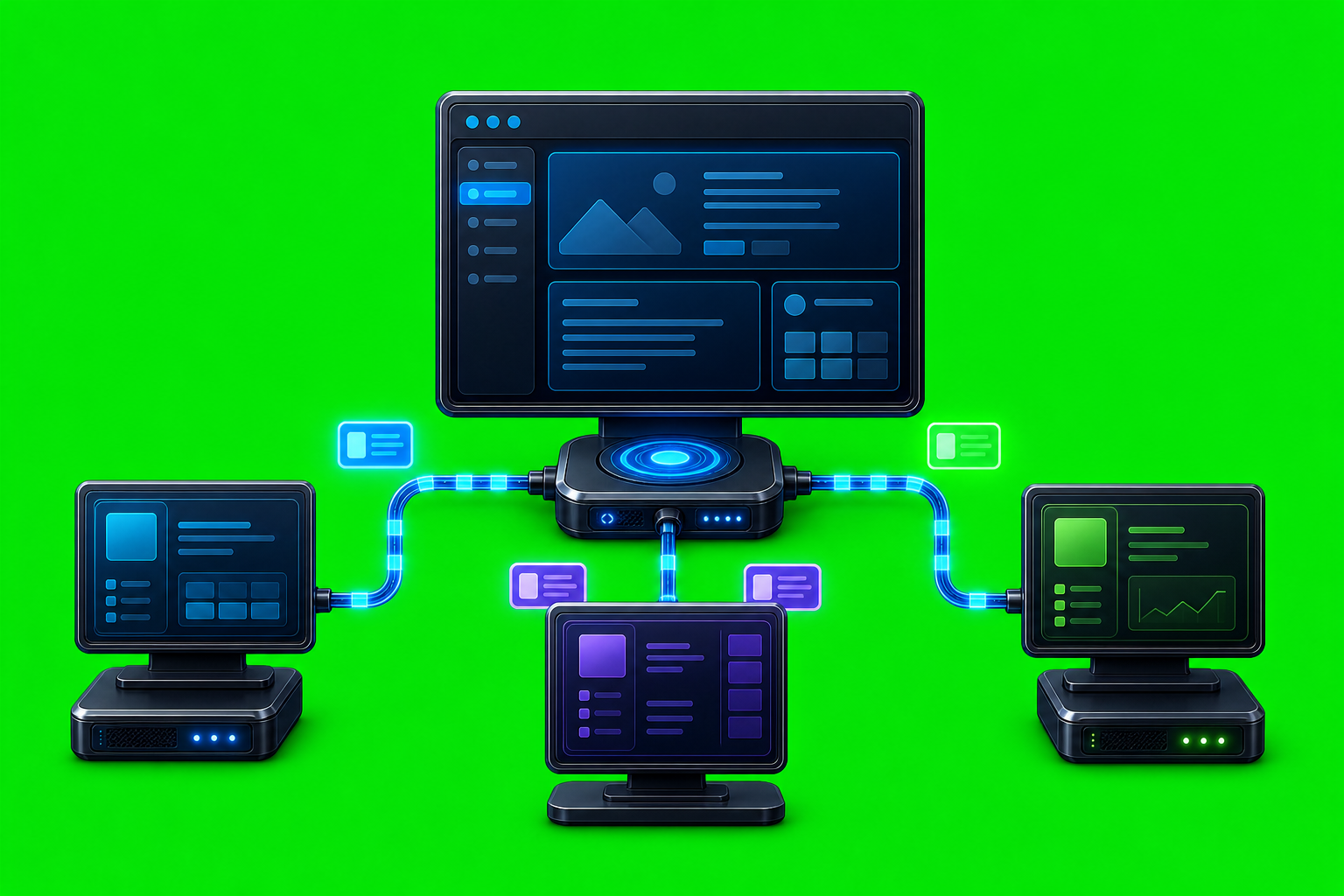
AxiOwl is built for that coordination layer. Its core contract is deliberately narrow: a named sender sends a text body to a named target, AxiOwl resolves both names, builds one final visible message, uses one provider edge, records what happened, and returns an honest receipt. That makes it useful for multi-agent WordPress work because it gives operators a controlled way to route instructions between chats without pretending to be the WordPress runtime itself.
The WordPress Problem AxiOwl Helps With
A serious WordPress environment is rarely just "a site." It may include a production host, a development host, a database container, a plugin source tree, a built React bundle, Cloudflare routing, SSH-only maintenance paths, and browser verification steps. When several agents are working in parallel, the operational risks are familiar:
- one agent edits a plugin file while another assumes the old build is still current;
- a browser-verification agent reports a visual state without knowing whether the build watcher rebuilt the bundle;
- a remote-node agent checks the wrong host or container;
- an implementation agent asks for help, but the recipient cannot tell who sent the request or where to reply;
- a "sent" message is mistaken for a completed review.
AxiOwl does not remove the need for WordPress expertise, SSH discipline, or deployment checks. Instead, it makes the communication path between agents explicit. The sender, target, provider, session, node, receipt, and evidence are part of the transport model rather than informal chat memory.
AxiOwl Routes To Named Agents, Not Vague Roles
The AxiOwl registry model is intentionally simple. The planning docs describe it as a table shaped like:
agent name -> provider -> provider session id -> node
That matters for WordPress operations. Instead of saying "someone check the frontend," an operator can send a specific task to a specific enrolled agent:
axiowl send --to "WordPress frontend verifier" --body "Check the dev site after the plugin rebuild and report only the browser-visible result."
For longer operational instructions, AxiOwl supports stdin so the body can preserve line breaks, quotes, checklists, and command examples:
@'
Please verify the WordPress plugin build on the dev frontend.

Scope:
- do not publish content
- do not restart containers
- inspect the built plugin output only
- report the exact URL and visible browser result
'@ | axiowl send --to "WordPress frontend verifier" --stdin
That stdin path is important in real operations because WordPress instructions often contain shell commands, file paths, URLs, JSON snippets, and "do not touch" boundaries. A truncated or rewrapped message can cause avoidable mistakes.
The Send Pipeline Keeps Handoffs Boring
The source docs describe a fixed send pipeline:
CLI
-> local service
-> sender resolution
-> target resolution
-> final visible body builder
-> provider edge
-> evidence log
-> receipt
In the current Windows desktop implementation, the README notes that the CLI skeleton, fixed send pipeline, TSV registry, final visible body builder, JSONL evidence log, provider edge interface, and live provider delivery for current local Windows edges are implemented. The always-running local service is reserved but not implemented yet, so the CLI currently runs the local pipeline directly.
For a WordPress operator, the useful part is the discipline of the pipeline. AxiOwl resolves the sender and target before dispatch. It builds the final visible body once. It chooses one provider edge from registry facts. It records evidence and returns a receipt that should not claim more than AxiOwl can prove.
That last point is operationally important. AxiOwl's Codex skill explicitly says that a completed axiowl_send_message call proves send execution only, not a roundtrip reply. In WordPress terms, "the deployment-review agent received the request" is not the same as "the deployment is safe." AxiOwl helps keep those states separate.
MCP Makes Agent-To-Agent Sending Cleaner
AxiOwl's Codex integration exposes MCP tools for agent use. The bundled skill tells Codex agents to prefer the AxiOwl MCP server over hand-built shell commands because the tool receives Codex thread metadata. The tool surface includes:
axiowl_whoamito confirm the current host session identity as AxiOwl sees it;axiowl_list_agentsto list sendable targets from the local registry;axiowl_send_messageto send a message through AxiOwl.
The implementation also describes axiowl_send_message as using the host MCP session ID as the stable sender identity key. That is the right shape for multi-agent work: the agent should not invent its own session ID, manually add a fake sender, or route replies through an old fallback. AxiOwl derives the sender identity from the host context and the registry.
For WordPress operations, this means an implementation agent can ask a verifier for help without manually constructing a fragile return path. The final visible body can include the sender name and reply instruction only after AxiOwl has resolved the sender.
Remote Nodes Fit Split WordPress Environments
Many WordPress stacks are split across machines. A frontend node may run WordPress in Docker, a backend node may run API services, and a local workstation may coordinate work through SSH. AxiOwl's remote provider plan maps cleanly onto that kind of topology.
The remote provider uses outbound SSH from the local service to a remote node and runs:
axiowl relay-session --stdio
The protocol uses newline-delimited JSON frames such as hello, deliver, deliver_result, and error. The Windows implementation's remote provider writes relay frames, opens SSH with the node registry's host, user, and key path, and invokes axiowl relay-session --stdio on the remote side. The remote relay then either delivers directly to a provided target provider/session or runs the normal local AxiOwl message pipeline on the remote node.
The current Linux remote app is intentionally limited: it supports Codex CLI delivery only. It does not claim VS Code, Antigravity, desktop IPC, GUI, tray behavior, or remote-to-remote chaining. That boundary is useful rather than limiting in operations documentation because it prevents teams from assuming that every remote desktop workflow is already supported.
In a WordPress workflow, a local operator could route a request to a remote Codex agent that is already close to the target host:
axiowl registry add-node --id "frontend-dev" --host "<host>" --user "<ssh-user>" --key "<ssh-key-path>"
axiowl registry add-agent --name "Dev WordPress inspector" --provider remote --node "frontend-dev" --session "Remote Codex WordPress Agent"
axiowl send --to "Dev WordPress inspector" --body "Check the WordPress plugin directory and report current git status only."
The exact host names, keys, and allowed commands still belong to the operator's environment. AxiOwl's role is to make the agent target and transport route explicit.
A Practical Multi-Agent WordPress Pattern
A useful pattern is to separate implementation, verification, and operations review into different named agents:
- an implementation agent edits the WordPress plugin or theme code;
- a build agent checks the local or remote build output;
- a browser agent verifies the actual page behavior;
- an operations agent checks host identity, container state, and deployment risk;
- a content agent reviews final article or page copy.
AxiOwl can coordinate those agents with small, auditable handoffs. For example, after changing a WordPress plugin, the implementation agent can send:
@'
The plugin source was changed for the pricing page widget.

Please verify:
- whether the build output exists
- whether the WordPress container sees the updated plugin files
- whether any restart would interrupt an active operation

Do not change files. Report evidence only.
'@ | axiowl send --to "WordPress operations reviewer" --stdin
Then the operations reviewer can send a separate browser task:
axiowl send --to "Browser verifier" --body "Open the dev WordPress page and confirm whether the updated pricing widget is visible. Do not publish or edit content."
Each handoff has a named target. Each recipient gets a visible message. Each send produces a receipt whose meaning is limited to the send attempt. The human or lead agent can then combine the replies into a deployment decision.
Why Honest Receipts Matter
WordPress operations can be damaged by overconfident automation. A task runner that reports success because a command exited zero may still miss a failed browser state, stale cache, wrong container, or wrong node. AxiOwl's docs define multiple receipt levels, including accepted_by_axiowl, accepted_by_provider, degraded, failed, and unknown.
That language is valuable for multi-agent operations. AxiOwl should not say a recipient completed a WordPress check merely because the message was accepted by a provider. It should not silently fall back to another provider family. It should not invent unknown sender names. It should not treat provider stdout as a receiver reply.
Those boundaries make AxiOwl better suited for cautious operational work. It helps route the work, but it leaves proof where proof belongs: in the agent's explicit report, the evidence log, the browser result, the host identity check, the build output, or the WordPress admin state.
The Operator Value
The practical value is not magic automation. It is operational clarity:
- agents are addressed by enrolled names rather than guessed chat titles;
- long WordPress instructions can be sent safely through stdin;
- Codex MCP calls can carry host session metadata instead of invented sender names;
- local and remote agents can be modeled through registry rows and node records;
- receipts separate message delivery from task completion;
- remote transport uses SSH relay behavior rather than requiring public listeners on the operator workstation.
For WordPress teams using multiple agents, that is enough to change the workflow. The lead operator can assign narrow checks, keep edits scoped, ask for independent verification, and avoid relying on a single chat transcript as the only source of coordination.
Closing
Using AxiOwl for multi-agent WordPress operations means treating agent communication as infrastructure. AxiOwl does not replace WordPress, Docker, SSH, browser testing, or deployment discipline. It gives those workflows a clearer message layer: named senders, named targets, registry-backed routing, visible bodies, evidence, and honest receipts.
That is the right foundation for parallel WordPress work. When multiple agents are touching adjacent parts of a site, the safest coordination tool is the one that makes every handoff explicit and refuses to claim more than it can prove.