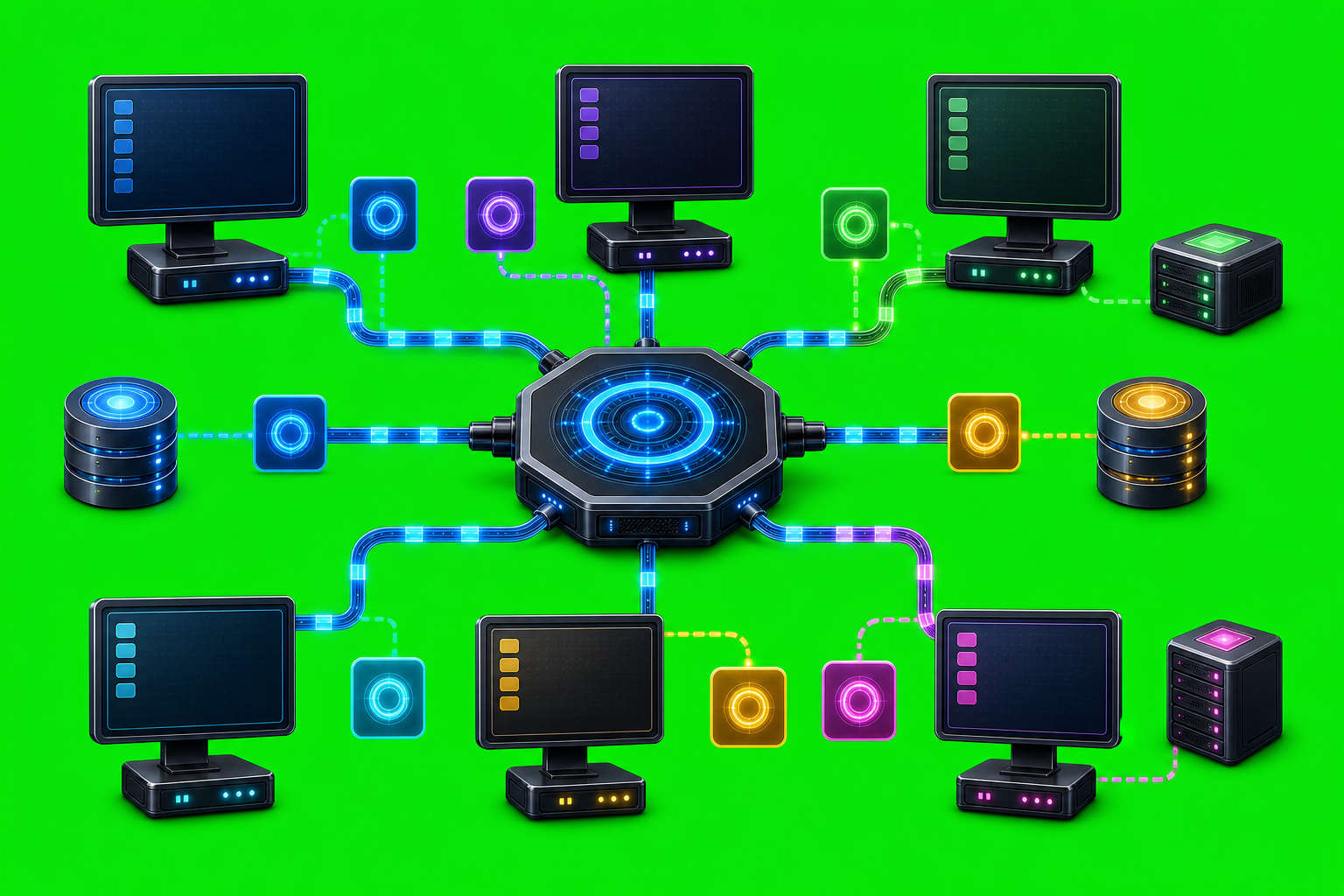
Using AxiOwl to Coordinate a Small AI Development Team
Small AI development teams do not always look like one person chatting with one model. A real workflow may involve a Codex thread handling code changes, a VS Code or Copilot-backed chat checking editor behavior, an Antigravity session working through a desktop surface, and another provider running on a Linux node. The hard part is not only sending prompts. It is keeping track of which named agent owns which session, how to address it, what message was sent, and whether the selected route accepted the delivery.
AxiOwl is built around that coordination problem. Its current C++ implementation treats coordination as a concrete messaging pipeline: one sender, one target, one body, one provider edge, and one receipt. That sounds intentionally plain because the product is trying to avoid a common failure mode in multi-agent work: invisible routing logic that guesses where a message should go and then leaves the operator unsure what actually happened.
A Team Made Of Named Agents
In AxiOwl, the operator does not have to think only in raw provider session IDs. The registry maps a human-facing agent name to the provider details needed for delivery. The registry record includes fields such as display name, aliases, provider, provider session ID, node ID, enabled/sendable flags, source, timestamps, and last error.
That matters for a small development team. You can give an agent a practical name like "Frontend reviewer", "Codex implementation thread", or "Remote Linux helper", then route work to that name instead of copying opaque IDs through every handoff.
The current command surface exposes that model directly:
axiowl list agents
Manual enrollment is also explicit:
axiowl registry add-agent --name "Frontend reviewer" --provider codex --session "<provider-session-id>"
For remote work, AxiOwl has node registry commands as well:
axiowl node add --id "front" --host "<host>" --ssh-user "<ssh-user>" --key "<ssh-key-path>"
axiowl node verify --id "front"
That gives a small team a shared addressing layer. The useful unit becomes "send this to the named agent responsible for this part of the work," not "find the right provider window and paste into it manually."
Sending Work Without Losing The Sender
The everyday send command is intentionally small:
axiowl send --to "Frontend reviewer" --body "Please check whether the new onboarding page still matches the WordPress plugin layout."
For anything that shell quoting might damage, AxiOwl supports stdin:
@'
Review this patch plan.

Focus on routing, build impact, and tests.
'@ | axiowl send --to "Codex implementation thread" --stdin
The implementation does more than pass that text along. The message pipeline resolves the sender, resolves the target, builds a final visible body, selects the provider edge, hands delivery to the delivery worker, and writes evidence. If sender identity cannot be resolved in cases where the final body needs it, the pipeline rejects the send instead of quietly inventing a fake sender.
That is important in team coordination because replies need somewhere honest to go. AxiOwl's final visible body builder includes the sender name and a reply instruction block when the sender is resolved. The current implementation uses an MCP tool-call style reply instruction, including the target sender, optional run ID, and receipt-for-message ID. In practice, that gives the receiving agent enough context to respond through AxiOwl when a response is actually needed.
A Fixed Pipeline Instead Of Ad Hoc Handoffs
The architecture plan in the repo describes AxiOwl's core rule this way: receive request, resolve sender, resolve target, build final visible body, choose provider edge, send via provider edge, record evidence, return receipt.
The current code follows that shape in the message pipeline. It records an initial acceptance stage when a request enters the pipeline, validates target and body, resolves sender identity from explicit input or registry state, tries targeted discovery once when a target is missing or needs repair, checks whether the target is sendable, builds the final body, and then starts a background delivery-worker handoff.
The distinction between AxiOwl acceptance and provider acceptance is deliberate. The pipeline can mark a message as accepted by AxiOwl after target resolution, then the delivery worker records provider-stage evidence separately. That is a better operational model than pretending a send receipt means the recipient replied. A reply is a separate message.
For small teams, this keeps task routing auditable. If a reviewer says they never saw a handoff, the operator can look at the AxiOwl status paths and logs rather than reconstructing the flow from chat memory.
Providers Are Edges, Not The Whole System
AxiOwl's provider-edge layer keeps provider-specific behavior out at the boundary. The current provider router recognizes local and CLI-oriented provider families including Codex, Codex CLI, VS Code native, VS Code Copilot-backed, Antigravity, Antigravity CLI, Cursor, Cursor CLI, Claude Code CLI, Copilot CLI, and OpenCode CLI. If a registry target names an unknown provider, the provider edge returns a clear failure. If the provider is marked as remote in this local-provider remediation build, remote delivery is explicitly reported as out of scope rather than silently pretending to work.
That design is useful for a small AI development team because different agents can live in different tools. A coding agent might work through Codex, an editor-focused agent might need VS Code context, and another session might be better suited to Antigravity or Cursor. AxiOwl's middle layer does not need to become a special-case implementation for each one. It resolves the message and hands provider-specific delivery to the selected edge.
The Windows desktop README also documents the runtime split in the current line: the Windows build is the local coordinator, registry owner, and outbound SSH remote provider, while the Linux build is a remote Codex endpoint using axiowl relay-session --stdio. The same README notes that the local always-running service is not implemented yet; the current CLI runs the direct local pipeline skeleton. That boundary matters when planning production use: the model is already shaped around a service-owned coordinator, but operators should treat the present implementation according to what it actually does.
Creating And Renaming Work Sessions
Coordination is not only about sending to existing agents. AxiOwl also has a create command surface for starting provider sessions and saving the resulting registry row when a stable provider session ID is returned:
axiowl create --provider codex --name "API cleanup thread" --body "Start by inspecting the routing layer and summarize the safest cleanup path."
The CLI help in the current code lists create support across provider names such as Codex, Codex CLI, Antigravity, Antigravity CLI, VS Code native, VS Code Copilot, Cursor, Cursor CLI, Claude Code CLI, Copilot CLI, and OpenCode CLI. The create lifecycle code records request status, first-message hash, provider session ID, provider title, registry display name, correlation state, evidence, and error information. When a created session can be correlated, AxiOwl enrolls it as a sendable agent row.
There is also a rename path:
axiowl rename --agent "API cleanup thread" --name "Backend API cleanup reviewer"
For a small team, naming is not cosmetic. It is how a human operator knows which agent owns which responsibility. A stable name also makes future routing less brittle than relying on a copied session ID.
Practical Team Workflow
A practical small-team workflow with AxiOwl can be simple:
- Discover or register the agents that are active for the project.
- Give each agent a name that reflects its responsibility.
- Use
axiowl sendfor focused handoffs, with--stdinfor long prompts, code, JSON, or checklists. - Use the registry and node commands to keep targets inspectable.
- Use
axiowl statusto see state paths, registered agent counts, node counts, evidence log location, delivery log location, create lifecycle log location, activation status, and the current runtime role.
The point is not to turn a small development team into a complicated orchestration platform. The point is to reduce the number of fragile manual steps between one agent finishing a task and the next agent receiving a precise handoff.
Why This Matters In Daily Development
AI development work often fails at the seams between tools. One agent writes code but another needs to verify it in the editor. A remote node has the right environment but a local chat has the right context. A prompt gets pasted into the wrong session. A reply is written, but the original sender cannot be identified. These are not abstract coordination problems. They are routine operational problems.
AxiOwl's current implementation addresses them with a registry, explicit sender and target resolution, final visible message construction, provider-edge delivery, and evidence logs. It also fails loudly when a target is unknown, a sender cannot be resolved, a target is not sendable, a provider is unknown, or a remote path is outside the current build's scope.
That combination is what makes it useful for a small AI development team. It gives the operator a way to treat multiple AI sessions as named teammates while still preserving the technical facts needed to debug a failed handoff.
Closing
Using AxiOwl to coordinate a small AI development team means working through names, registry rows, provider edges, and receipts instead of scattered manual chat copying. The implementation is still explicit about what is complete and what is not: the local service is planned but not implemented in this line, remote relay is constrained, and provider behavior is kept at the edge. Within those boundaries, AxiOwl provides a concrete coordination pattern for teams that already rely on multiple AI agents to move software work forward.