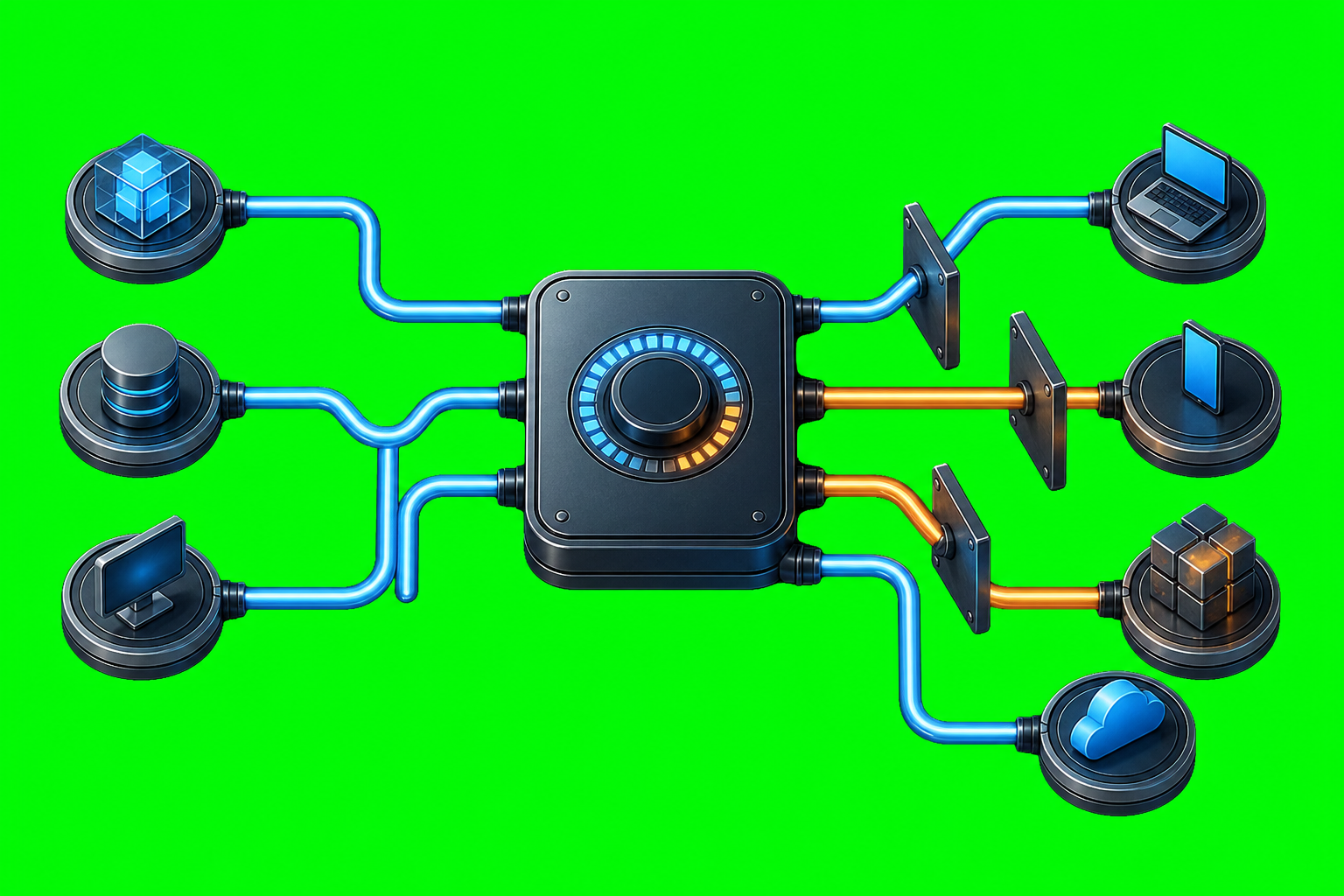
Why AxiOwl Is Not a Subagent System
Calling AxiOwl a subagent system misses the main design point. A subagent system usually means one controlling agent creates or manages hidden worker agents under its own execution model. AxiOwl is built for a different job: letting existing AI provider sessions send messages to each other through a local coordinator, while preserving the identity of the provider session that sent or received the message.
That distinction matters operationally. AxiOwl is not trying to replace Codex, Cursor, VS Code, Copilot, Antigravity, or other provider surfaces. It is trying to make those surfaces addressable, auditable, and able to reply through a shared message path.
A Router, Not a Parent Agent
The current repo describes AxiOwl as a local Windows coordinator for provider-to-provider messaging. The user docs in docs/user/README.md say it discovers provider sessions, records them in a local registry, sends messages to selected sessions, exposes MCP tools for replies, and records receipts and delivery evidence.
The architecture doc in docs/reference/architecture-overview.md gives the same shape in implementation terms:
apps/windows-desktop/src/cli.cppowns commands such assend,create,rename,discover,list,status,mcp-server, and delivery worker modes.apps/windows-desktop/src/mcp_server.cppexposes typed MCP tools.apps/windows-desktop/src/message_pipeline.cppvalidates requests, resolves sender and target identity, performs a bounded discovery repair, and hands delivery to the provider layer.apps/windows-desktop/src/provider_edges.cppdispatches to provider-specific delivery code.apps/windows-desktop/src/registry.cppstores the durable mapping from names and aliases to provider sessions.
That is routing infrastructure. It is not a private hierarchy of child workers.
The Registry Points At Real Provider Sessions
The registry model is the clearest reason AxiOwl is not a subagent framework. In apps/windows-desktop/src/models.hpp, an AgentRecord contains fields such as display_name, aliases, provider, provider_session_id, node_id, sendable, source, last_seen_at, last_verified_at, and last_error.
Those fields are not the shape of an internal task tree. They are the shape of an address book for real sessions owned by real providers.
The CLI reflects that model. axiowl list agents prints sendable registry rows with their provider and node. axiowl registry add-agent requires a name, provider, session id, and optional node/source metadata. axiowl discover <provider> searches provider-specific surfaces and merges rows into %LOCALAPPDATA%\AxiOwl\registry\agents.tsv.
The important word is provider. AxiOwl does not pretend that a message target is valid just because a display name exists. It needs provider identity, session identity, and a sendable row.
Sender Identity Is A First-Class Requirement
A hidden subagent system can often get away with vague authorship because the parent process owns the whole exchange. AxiOwl cannot do that. Replies need to route back to the actual sender session.
That is why the MCP server in apps/windows-desktop/src/mcp_server.cpp treats sender metadata as mandatory. The axiowl_send_message tool description says the host MCP session ID is used as the stable sender identity key, and that success is only an MCP-to-AxiOwl handoff receipt. In handle_send_message, AxiOwl resolves the host identity, refuses a no-session send, registers the sender, and then invokes the CLI send path with --from and --from-node.
The same file includes explicit failure text for missing metadata: AxiOwl refuses to launch sends or creates when the provider host does not provide usable session ID metadata. That is not how a silent subagent launcher behaves. It is how a message router protects return paths.
Receipts Do Not Pretend To Be Completion
AxiOwl is careful about receipt boundaries. In apps/windows-desktop/src/message_pipeline.cpp, a send request is accepted only after the target, body, and sender identity are validated. The pipeline then resolves the target from the registry, runs one targeted discovery repair if needed, rejects non-sendable targets, builds the final visible body, and starts a delivery worker handoff.
The CLI output in run_send is explicit: accepted_by_axiowl means the MCP or CLI request was accepted by AxiOwl. It does not imply provider delivery, provider wake-up, or provider reply. The architecture docs make the same distinction between an AxiOwl handoff receipt, a provider result, and end-to-end proof from a provider reply through MCP.
This is another practical difference from subagent orchestration. AxiOwl does not claim a task is done because it launched something. It records the boundary it actually crossed.
Provider Edges Keep Ownership With The Provider
The dispatch table in apps/windows-desktop/src/provider_edges.cpp routes delivery by provider value. Current provider edges include Codex desktop sessions, Codex CLI, VS Code native, VS Code Copilot-backed, Antigravity, Cursor, Claude Code CLI, Copilot CLI, and OpenCode CLI paths. Unsupported or unknown providers fail through explicit result states instead of being papered over.
The provider support matrix in docs/reference/provider-support-matrix.md also sets a high bar for support. A provider is not supported merely because AxiOwl can write a config file or start a process. The bar includes discovery, install/config, send, provider receive, provider MCP reply, and correct provider-owned sender identity.
That support bar keeps AxiOwl honest. It treats each provider as an independent system with its own session model, metadata constraints, and delivery behavior.
The Message Body Makes Reply Routing Visible
AxiOwl does add helper text to a delivered message, but that helper text is not a hidden control channel. In apps/windows-desktop/src/final_visible_body_builder.cpp, the final body starts with the resolved sender name, includes the original message, and appends a reply instruction using mcp__axiowl.axiowl_send_message.
That means the recipient provider can reply through AxiOwl, and the reply carries enough identity information to route back. The body is visible, the sender is named, and the route is auditable in logs.
For operators, that is a useful property. If a provider did not reply, the delivery log and evidence log can show whether AxiOwl accepted the request, resolved the registry target, started the delivery worker, wrote to the provider edge, or received a response-backed proof. The system is built around observable message movement, not invisible delegation.
Why The Difference Matters
The practical value of AxiOwl comes from connecting tools without collapsing them into one agent runtime.
Developers can keep using the provider surfaces they already rely on. Operators can inspect registry rows, provider names, session ids, node ids, source fields, last-seen times, and last errors. Integrations can fail loudly when sender metadata is missing instead of guessing. Support status can be tied to response-backed proof rather than configuration success.
That makes AxiOwl closer to a local message coordination layer than to a subagent system. It helps independent provider sessions find each other, send messages, and reply with traceable identity. The control remains visible, provider-specific, and grounded in the actual session that handled the work.
The Short Version
AxiOwl does not make one agent secretly manage lesser agents. It gives existing provider sessions names, routes, receipts, and reply paths. The repo backs that up in the registry model, MCP metadata checks, delivery receipt boundary, provider edge dispatch table, and support matrix.
That is why "subagent system" is the wrong label. AxiOwl is provider-to-provider messaging with durable identity and auditability.