Why AxiOwl Is Not Just Another Wrapper
It is easy to call any developer tool that sits in front of another tool a wrapper. Sometimes that is accurate. A thin wrapper takes arguments, calls an underlying command, and returns whatever came back.
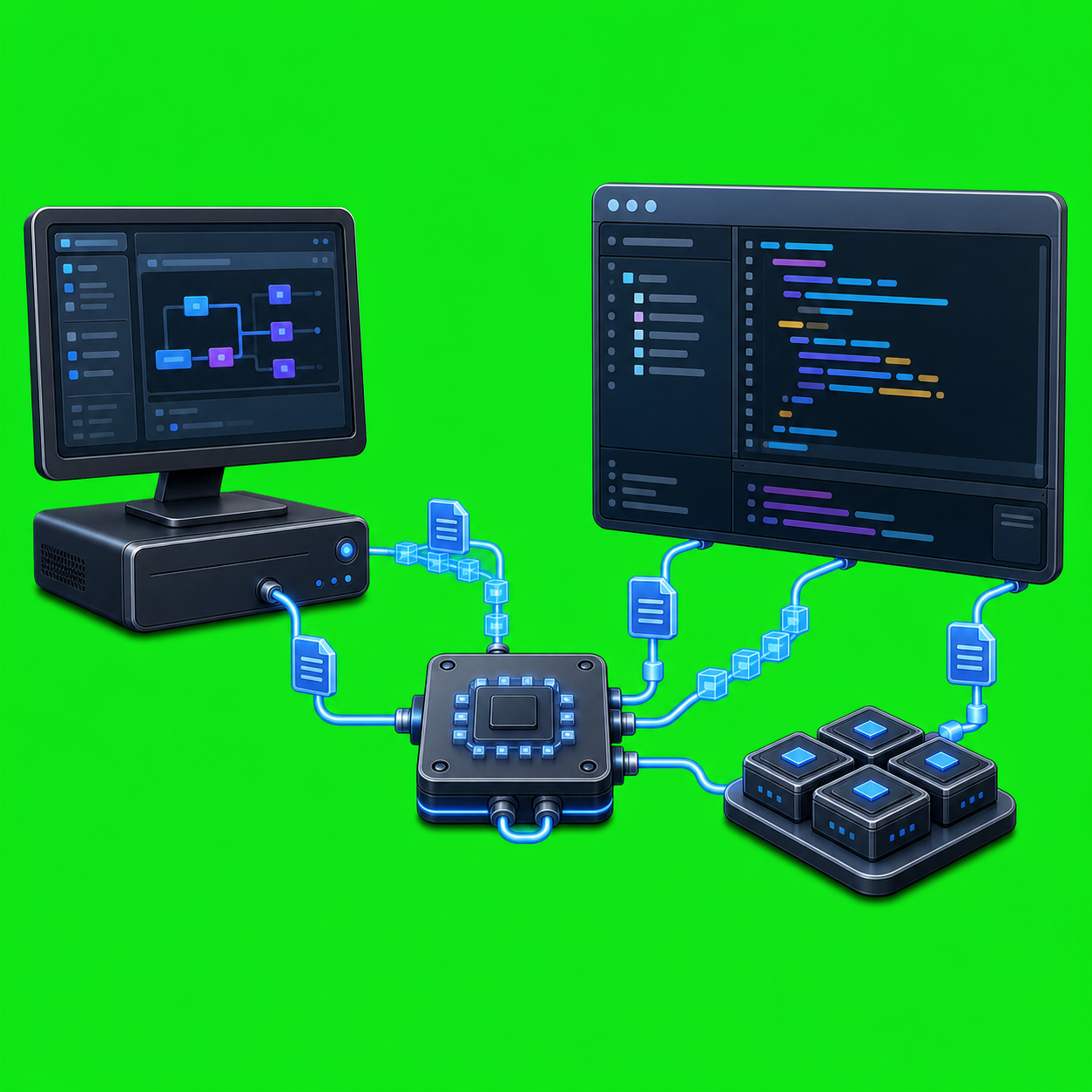
AxiOwl is built for a different job. It is a local coordinator for AI provider sessions: it discovers sessions, records them in a durable registry, resolves sender and target identity, builds a visible message body, dispatches through provider-specific edges, exposes MCP tools for replies, and records receipts and evidence. The underlying providers still do the AI work. AxiOwl handles the coordination problem around them.
That distinction matters because agent-to-agent messaging is not solved by shelling out to a provider CLI.
A Wrapper Forwards A Command
A wrapper usually has a simple mental model:
some-wrapper --target thing --message "hello"
Internally, it might translate that into a provider command, launch a process, and print stdout. That can be useful, but it leaves hard questions unanswered:
- Which provider session is the human-friendly target name supposed to mean?
- Who sent the message?
- Can the recipient reply through a stable path?
- Did the provider actually accept the message, or did the wrapper only start a process?
- What should happen when a discovered chat is stale?
- Which provider-specific integration files were installed, patched, or left untouched?
AxiOwl's codebase treats those as first-order product problems, not incidental details.
AxiOwl Starts With A Registry
The current Windows implementation keeps a local registry of agents and nodes. The registry row is not just a label. In registry.cpp and the architecture docs, an agent record includes a display name, aliases, provider, provider-owned session ID, node ID, enabled state, sendable state, source, last-seen timestamps, verification timestamps, and the last known error.
That registry lets AxiOwl separate human names from provider addresses. A person can send to a named agent, while the provider edge receives the provider session ID it actually needs.
The public command is intentionally small:
axiowl send --to "Target chat name" --body "Message text"
For code, JSON, lists, or anything likely to be damaged by shell quoting, the docs use stdin:
@'
<full message>
'@ | axiowl send --to "Target chat name" --stdin
That command is not the whole system. It is the front door into the pipeline.
The Pipeline Does Real Work
The developer docs describe the message flow as CLI or MCP input moving through MessagePipeline, validation, sender resolution, target registry resolution, targeted discovery repair, final visible body construction, provider-edge dispatch, and delivery logging.
The implementation in message_pipeline.cpp follows that shape. It rejects empty targets and empty bodies. It resolves the sender from registry or explicit identity. If a sender or target looks like a stale or unresolved provider session, it can run a targeted discovery repair once. It refuses to treat unknown sender identity as a normal success path.
Only after that does it mark the message accepted by AxiOwl and hand the request to the delivery layer.
That is an important boundary. The architecture docs and user docs both distinguish accepted_by_axiowl from provider delivery proof. An AxiOwl receipt means the coordinator accepted and routed the request. Stronger proof comes when a provider receives the message and replies through AxiOwl MCP with correct provider-owned sender identity.
Provider Edges Are Explicit
A generic wrapper tends to hide provider differences behind one call pattern. AxiOwl does the opposite: it keeps the middle small and makes provider-specific behavior live at provider edges.
provider_edges.cpp dispatches to named provider implementations such as Codex, Codex CLI, VS Code native, VS Code Copilot-backed, Antigravity, Cursor, Claude Code CLI, Copilot CLI, and OpenCode CLI. Unsupported or out-of-scope routes fail explicitly instead of pretending to work.
The provider support matrix reinforces that approach. A surface is not considered supported merely because AxiOwl can write a config file or start a process. The current support bar includes discovery, install/config, send, provider receive, provider MCP reply, and correct sender identity. Some surfaces are supported, some are targets, and remote delivery is explicitly marked out of scope for the local-provider remediation build.
That is coordination discipline. AxiOwl is not just trying to reach a provider somehow. It is trying to know which path was used and what level of proof exists.
MCP Replies Are Part Of The Design
AxiOwl exposes an MCP server with tools such as axiowl_send_message, axiowl_create_agent, axiowl_list_agents, discovery, status, and registry operations. The MCP instructions in mcp_server.cpp tell provider hosts to use typed AxiOwl tools and not invent raw command arguments or sender IDs.
This is one of the clearest differences from a wrapper. A wrapper can launch a provider. AxiOwl needs the recipient to be able to reply through a routable path. For that, it needs provider/session metadata, not a guessed display name.
The final visible body builder makes this concrete. When sender identity is resolved, AxiOwl appends reply instructions that point back to axiowl_send_message with the sender name, run ID, and receipt message ID. If sender identity is not resolved, it warns instead of attaching a fake send-back command.
That is not decoration. It is how AxiOwl keeps reply routing tied to real sender identity.
Evidence Is Not An Afterthought
AxiOwl records JSONL evidence events and delivery stages. evidence_log.cpp appends timestamped structured records. delivery_worker.cpp writes request files, validates delivery worker input, dispatches to provider edges, records provider result state, and logs whether a provider write succeeded, failed, or was only an unverified handoff.
The status command also surfaces operational state: registry path, node registry path, evidence log path, delivery log path, artifact manifest, installed executable hash status, activation state, service endpoint, runtime role, and registered agent counts.
That matters in day-to-day use. When an agent message fails, "the wrapper returned an error" is not enough. Operators need to know whether AxiOwl accepted the message, whether target resolution failed, whether discovery found evidence but no sendable exact row, whether the delivery worker started, and whether the provider edge reported acceptance.
Installation Is Provider-Scoped
The installer docs are also evidence that AxiOwl is more than a command shim. The Windows MSI installs the local runtime, manifest, PATH entry, logs, registry directories, MCP configs, provider bridge extensions, and selected provider patches or configs.
The installer behavior matrix states that provider features behave like separate install units. Unchecked providers should not be installed, patched, closed, restarted, or removed as collateral damage. Provider checkboxes should default from discovery, not stale assumptions. Selected provider features should fail loudly when they cannot be installed safely.
That is a product boundary a simple wrapper usually does not need. AxiOwl is responsible for integrating with real provider surfaces without trampling unrelated provider state.
The Practical Value
For an operator or developer, the value is not that AxiOwl hides every provider behind one magical abstraction. The value is that it makes provider-to-provider messaging inspectable.
You can list agents:
axiowl list agents
You can run discovery:
axiowl discover all --json
You can inspect status:
axiowl status
You can register a known session when needed:
axiowl registry add-agent --name "Build Agent" --provider codex --session "<provider-session-id>"
And when a provider supports the full path, the target can reply through AxiOwl MCP instead of leaving the sender to infer what happened from process output.
A Better Mental Model
The better mental model is not "AxiOwl wraps AI tools." It is:
CLI or MCP call
  -> local AxiOwl coordinator
  -> durable registry
  -> sender and target resolution
  -> final visible body
  -> provider-specific edge
  -> evidence and receipt trail
That is why the product is designed around names, provider session IDs, MCP metadata, discovery, selected integrations, explicit provider support status, and honest receipts.
AxiOwl does not replace Codex, VS Code, Cursor, Antigravity, or other provider surfaces. It gives them a coordination layer that can send a message to the right place, preserve sender identity, ask for replies through a known tool path, and leave enough evidence for a human to understand what happened.
That is not just another wrapper. It is the missing operational layer between separate AI agent sessions.